Editorial Preview · Pediatric Health
The Role of Breathing in Facial Development
A plain-language introduction to why breathing route, oral posture, and sleep observations form part of a broader childhood growth conversation.
This is fictional preview copy for layout approval. It is general education, not medical advice or a diagnosis, and requires clinical review and references before publication.
The bigger picture
Breathing is one part of a connected system
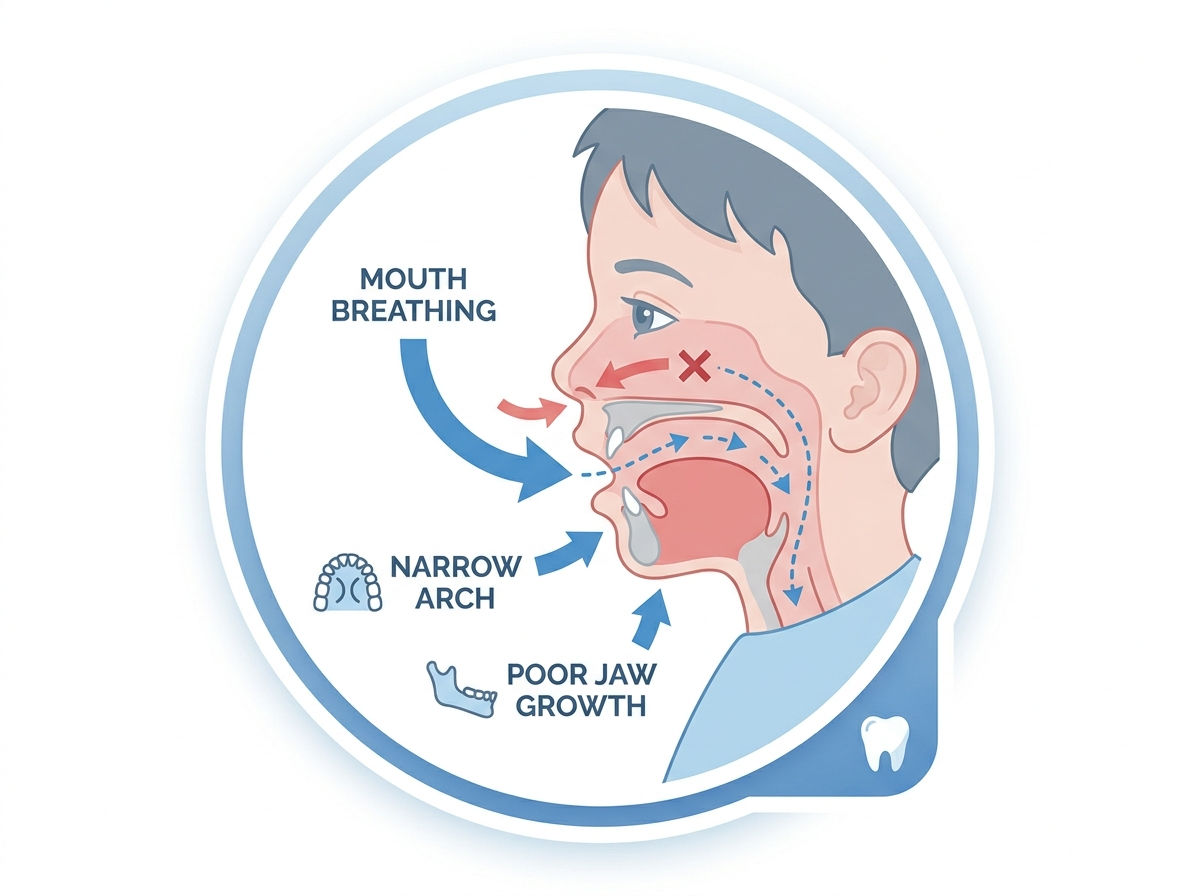
Breathing, tongue position, lip seal, chewing, swallowing, sleep, posture, and growth are often discussed together because they influence how a child uses the muscles of the face and mouth.
No single observation proves that treatment is needed. A child may breathe through the mouth temporarily because of a cold, allergies, exercise, or another short-term reason. Persistent patterns deserve a calm, individual conversation with an appropriately qualified professional.
What families may notice
Patterns worth mentioning at an appointment
Useful observations can include an open-mouth resting posture, dry mouth on waking, noisy sleep, difficulty keeping the lips together comfortably, unusual chewing habits, or ongoing concerns about sleep quality.
These signs can have many explanations. Sharing when they occur, how long they have been present, and whether they change during illness or activity gives the care team more useful context.
A responsible next step
Start with questions and coordinated care
A dental professional may consider oral function and growth, while medical or allied-health professionals may be involved when nasal obstruction, sleep, speech, or other concerns fall outside dental scope.
The goal is not to attach a label from a photograph or checklist. It is to understand the child’s overall pattern and decide whether monitoring, guidance, referral, or treatment is appropriate.
References and review status
Clinical references, author credentials, disclosures, and medical review will be added after content approval. Do not publish this preview as patient guidance.